Just ask Marshall Islands
By Jayvee Vallejera
President Donald Trump’s recent call for the resumption of nuclear tests struck a chord with Pacific island nations, which are still reeling from the impact of nuclear tests conducted between the 1940s and 1970s. Those tests left long-term contamination, health problems, displacement of populations, and unresolved disputes over compensation and accountability.
The specter of the nuclear tests never stops haunting the Marshall Islands, a country of some 1,200 islands and atolls, where the U.S. detonated dozens of nuclear devices between 1946 and 1958.
During the 80th United Nations General Assembly meeting in September, Marshall Islands President Hilda Heine called on the United Nations to apologize for its role in allowing nuclear tests at the Marshall Islands after World War II, despite the opposition of its people.
“We can’t undo the past. But as a United Nations, we owe it to ourselves to make amends through the adoption of a resolution that formally apologizes for the failure to heed the petition of the Marshallese people,” she said. “By doing so, all of us will begin the process of healing and to reestablish faith and trust in this institution.”
Heine said the difficult lessons of the Marshall Islands’ past and its ruinous experience with nuclear testing should help drive international efforts to curb and end nuclear threats. The Marshall Islands is also a party to the South Pacific Nuclear Free Zone Treaty—also known as the Treaty of Rarotonga—on March 3, during the observance of its 35th month and Heine said the people of the Marshall Islands expect an apology. The treaty creates a nuclear-weapon-free zone in the South Pacific and prohibits the use, testing and possession of nuclear weapons within the area.
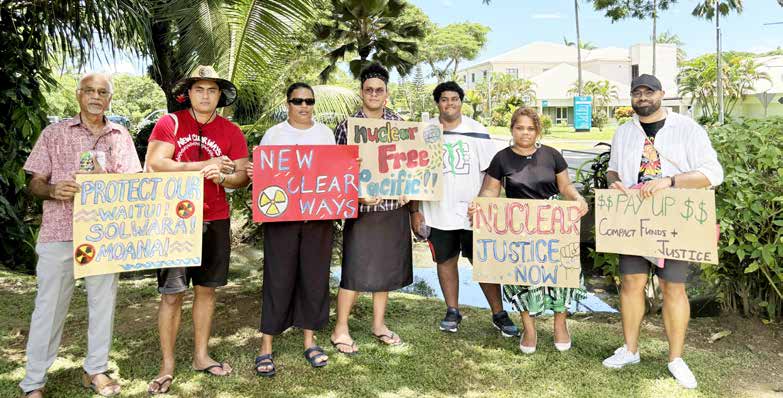
Between 1946 and 1996, nuclear testing by the United States, the United Kingdom and France transformed parts of the Pacific into testing grounds. Those tests caused long-lasting damage to environments and communities, produced generational health problems, and left contested legacies of displacement and contamination.
Survivors, community leaders and civil-society groups across the region continue to press for recognition, remediation and accountability. Civil-society organizations say renewed testing would disregard the region’s long-standing calls to end nuclear harm and could fuel a new arms race. For many Pacific communities, these discussions are not abstract; they are direct and personal, rooted in lived experience and in sites that remain polluted or socially disrupted.
Local leaders have repeatedly highlighted the connection between the tests and ongoing public-health and environmental issues. They warn that communities still coping with the aftermath of past detonations face risks from inadequate remediation and from the political decisions of distant powers. Many advocates emphasize that storytelling, historical record and grassroots organizing are crucial to preserving memory and seeking redress.
Key locations of testing
- Marshall Islands — including Bikini and Enewetak Atolls
- French Polynesia — sites such as Mururoa and Fangataufa
- Other affected Pacific communities and atolls across the region
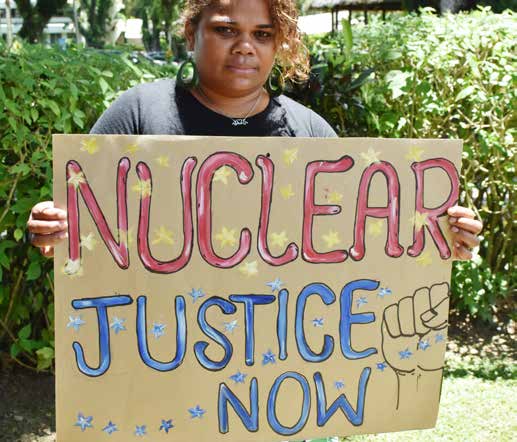
Regional advocacy has sought international attention and legal remedies. Some Pacific governments and representatives have raised the issue in international forums, calling for formal apologies, medical and environmental assistance, and recognition of the harms endured by affected populations. For many islanders, hunger for answers and redress remains tied to intergenerational trauma and ongoing socioeconomic challenges.
The scars of testing are not only physical but also cultural and social: disrupted livelihoods, contaminated food systems, and displacement have reshaped communities. Activists say effective responses require not only remediation but also meaningful engagement with affected communities, restoration of traditional land rights and long-term health monitoring.
Civil-society groups across the Pacific continue to keep the issue alive, urging that any renewed interest in nuclear capability be met with strong international opposition and that the rights and voices of Pacific islanders be central to future discussions. The legacy of tests, supporters argue, must remain a cautionary lesson that strengthens commitments to non-proliferation and to justice for those harmed.