Economic development promises keep falling short across Micronesia
By Joyce McClure
When submarine cables reach labor pools that are difficult to sustain, the Federated States of Micronesia, Palau and Guam, the limited size of local markets led leaders framed it as an economic driving point. Faster, cheaper internet would spark private-sector growth and expand able digital work. In Yap, the Pacific Islands Times reported in 2021 that a local carrier, iBoom Waab Inc., would help convert that connectivity into jobs and services. The plan was ambitious: fiber to the home, local technicians, offshore digital contracts that would bring revenue into Yap.
On the infrastructure side, much of that vision came to life. The World Bank’s Digital FSM program reports more connected premises and faster entry-level speeds across Yap, Chuuk and Pohnpei. Prices have fallen as competition and options like Starlink enter the market. FSM’s telecom regulator Authority has classified key fiber assets as “bottleneck facilities” requiring open access for competitors, while FSMTC completed a HANTRU network upgrade between Pohnpei and Guam in 2021, strengthening international backhaul capacity.
Connectivity and price performance have improved, but the step from better internet to broad-based employment isn’t automatic. Four years after PITI profiled Yap as “little island that could,” there have been no public announcements of major firms awarding Yap-based back-office contracts. The 2022 World Bank progress report tracks policy and service milestones, but not job creation.
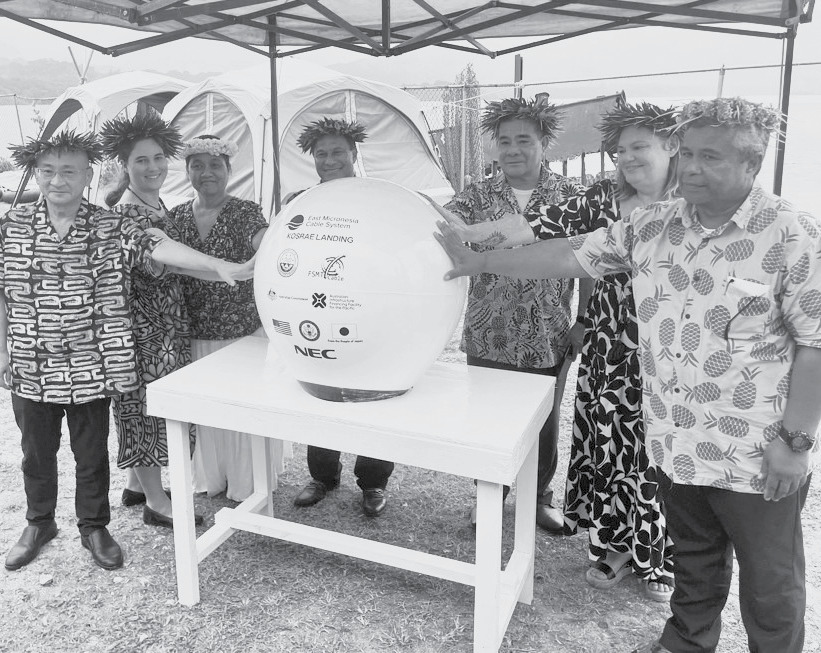
The cable’s route and the new Shore Stations are necessary to prevent monopoly pricing—signs of a thin, emerging market rather than a fully commercial ecosystem.
In Yap, iBoom’s “Broadband for Yap State” project, supported by the Internet Society Foundation and the APNIC Foundation’s ISIF Asia program, has delivered measurable results. The project built a fixed-wireless access network across Yap’s main island, connecting over 30 locations by 2022 through fiber backhaul and Gigabit Passive Fiber Network, and extended broadband service to schools and clinics.
Yet October 2023, the Yap State government and iBoom formalized their partnership in a public–private agreement. The infrastructure exists; the regulatory environment is maturing and local know-how has grown—but the job creation that inspired the initial promises is slower than expected. Economic commentators say functioning local internet and transport systems are more often a revenue provider rather than the export-led gateway once envisioned.
McKinsey & Company estimates that a private AI could transform or eliminate a large share of routine office-support roles by the mid-2030s. An International Monetary Fund study of the Philippines, a major outsourcing hub, finds about one-third of workers highly exposed to AI, with many of their roles shifting toward oversight and quality control rather than replacement.
Palau’s 2021 Medium-Term Development Plan emphasized renewable energy, small-business growth and digital innovation, yet the Asian Development Bank’s 2024 update continues to note that tourism and the public sector remain the major employers. New internet infrastructure creates opportunities, but the path to sustainable, high-quality jobs requires local investment in training, market-making and policy reforms.
“Customer service—are among the most automatable.”
Continued analysis warns that governments must pair connectivity investments with data-protection laws, digital-skills programs and frameworks for local content to capture value. Without targeted interventions, the benefits of faster internet can flow offshore to multinationals rather than to local entrepreneurs.