How Tokelauans keep their culture alive
By Ron Rocky Coloma
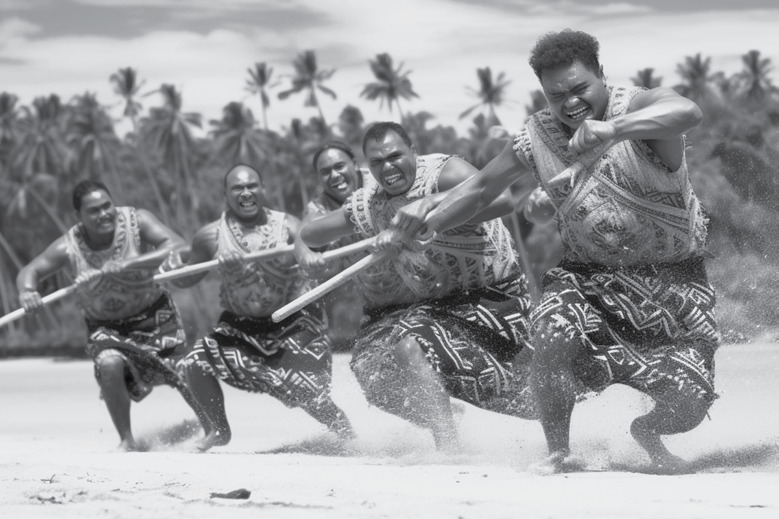
At a recent Tokelau Language Week seminar in Aotearoa, Higano “Gano” Perez held up a hand-drawn fishing circle and invited the audience to imagine rowing and paddling a canoe into the open lagoon. “We’re going to pretend our little outrigger’s flying here,” he said, demonstrating how Tokelau’s ancestors once caught large predatory fish. The lesson, like the island name itself, was rooted in balance between tradition and survival.
Tokelau, a dependent territory of Aotearoa (the Māori name for New Zealand) with three atolls—Tafu, Nukunonu and Fakaofo—is among the remotest and most isolated nations in the Pacific. Without an airport, residents rely on a 24-hour ferry ride from Samoa. Its 1,500 residents depend heavily on the ocean for food and connection. Yet, as Perez and others emphasized, the challenges facing Tokelau today go far beyond distance.
The 13th annual Tokelau Language Week, celebrated from Oct. 26 to Nov. 1, was themed “Tokelau, puaki mai mo fanau i te lumana’i,” encouraging communities to keep the language and traditions alive. The celebration is part of a New Zealand government initiative that began in 2012 to promote Pacific languages. UNESCO classifies Tokelau as endangered, adding urgency to efforts to preserve it.
Perez’s presentation traced Tokelau’s history from volcanic origins to its people’s resilience over the centuries. He spoke about “blackbirding,” the 19th-century slave trade that devastated Pacific communities when Peruvian ships kidnapped 90 percent of Tokelau’s male population in the 1860s. The capture and loss of life left lasting scars on the community.
Perez and other presenters discussed how migration shaped Tokelauan life. Large numbers of Tokelauans live abroad—about 9,800 in New Zealand and thousands more in Australia, Hawaii and the United States. Cultural festivals such as the Tokelau Tournament are held every two years, uniting those communities through sports and dance.
Community members described the challenges of keeping language and customs alive in the diaspora. “Our language and culture kept alive today will shape the pride of Tokelau’s next generations,” one speaker said. Families settled mainly in Wellington’s Hutt Valley, Porirua and Auckland, where new generations blended island traditions with urban lives.
“Alofa ki te tagata tamāmanu,” which means, “caring for the vulnerable.”
Perez said service to family and community is key. “Our language and culture kept alive today will shape the pride of Tokelau’s next generations.” Despite their small population, Tokelauans have built vibrant communities abroad.
Perez and other Tokelauans emphasized practical efforts — from language classes to cultural activities — to pass on traditions. He highlighted how families and community networks keep younger generations exposed to Tokelauan language and practices.
“I was born and raised in Nukunonu,” one participant said. Staying connected to Tokelau roots is important to many in the diaspora. Volunteers and community workers noted that cultural continuity requires sustained community effort, from teaching songs and dances to practical skills and shared stories.
Perez and the Tokelauan community continue to keep Te Gagana Tokelau alive by teaching more than just words: they teach identity, belonging and the social practices that make a people endure wherever they go.