What China’s Pacific playbook really means for Guam
The U.S.-China Economic and Security Review Commission’s latest report makes one thing impossible to ignore. Guam and its neighbors are now central terrain in a wider long contest between the United States and China. This is not a distant fight; it is happening across our region, and already shaping the conditions of life on Guam.
The report's fifth chapter, "Small Islands, Big Stakes," lays out how Beijing has spent years building influence across the Pacific island lands. It shows that China’s approach is not improvised. It is deliberate, coordinated and patient.
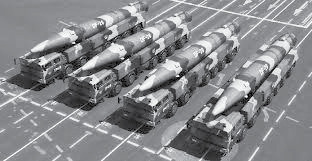

The report calls Guam the "gas station, repair shop and communications center" for U.S. forces in any conflict with China. If that is true, then everything happening around the second island chain should concern us.
Moreover, she argues that the American presence "must be as much about economic and trade as it is about military presence."
While the case studies focus on places like Palau, the Solomon Islands and Kiribati, the implications for Guam and its strategic position are clear. The report calls Guam a strategic community that receives steady, predictable investment and support.
First, build economic reliance. For many Pacific island nations, China has become the top trade partner. That leverage can turn into punishment and Palau knows this all too well. When it refused to switch recognition from Taiwan to Beijing, the Chinese government cut off tourism groups, dealing a heavy blow to a tourism-dependent economy.
Second, dominate the information environment. Beijing funds local media, sponsors travel for officials and journalists, and spreads narratives that cast the United States as untrustworthy, liable or self-interested.
Third, deepen police and security chains that Pacific island nations do not have militaries. Beijing has zeroed in through Japan, Taiwan and the Philippines. The second runs through the Northern Marianas, Guam, Palau and the Federated States of Micronesia. Most people on Guam hear that and think of World War II. Beijing hears it and thinks about the future. Chinese strategists have studied those battlefields; they answer a simple question. How could a rival stop the United States from using these islands?
Their answer is not only missiles. It is influence. It is pressure. It is shaping politics and economies of small island governments until they tilt away from the United States or feel too dependent on China to resist.
Guam should push for a real second island chain strategy. Guam, the CNMI and the freely associated states are a strategic community that receives steady, predictable investment. We need stronger defense ties against misinformation and opaque foreign money. We need hardened and diversified infrastructure, from cable routes to fuel storage to ports. Guam should take a larger diplomatic role. We must better connect America and Asia, and that connection gives us the ability to convene regional and shape regional conversation.
The United States mishandles this moment. Guam and our Micronesian neighbors could become pressure points as China squeezes early in a crisis. The solution is not to panic. It is to demand smarter policy.
Guam should push for a real second island chain strategy that treats Guam, the CNMI and the freely associated states as a connected strategic community that receives steady, predictable investment. We need stronger defense ties against misinformation and opaque foreign money. We need hardened and diversified infrastructure, from cable routes to fuel storage to ports. Guam should take a larger diplomatic role. We must better connect America and Asia, and that connection gives us the ability to convene regional and shape regional conversation.
We cannot change our geography. But we can change how it is used and who gets to decide. Guam should not accept being a passive square on someone else's game board. The competition is here. The question now is whether we let others define our future or take ownership of it while we still can.
Chirag M. Bhojwani is the director of the Regional Center for Public Policy at the University of Guam. Send feedback to strategy@blueconnectsolutions
The opinions expressed here are solely the author's and do not reflect the editorial position of the Pacific Island Times.