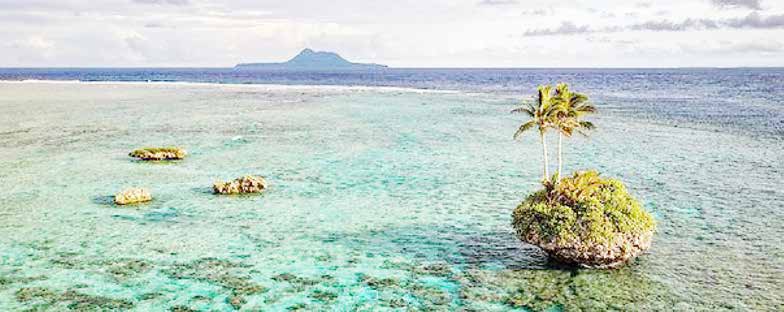
Vanuatu’s waters among the healthiest in the P
By Ron Rocky Coloma
Around the Pacific
When National Geographic Pristine Seas wrapped up its monthlong expedition in Vanuatu, the team left with more than just data; they left with optimism.
Led by veteran explorer Paul Rose, the mission explored the country's reefs, volcanic seascapes and marine life across its 80-plus islands. The results, Rose said, exceeded expectations.
“At the end of this expedition, I have more energy than I did at the beginning,” Rose said. “Everything worked beautifully. We had some challenging conditions along the way but the team was incredible. We achieved everything and more.”
National Geographic’s Pristine Seas project has spent over a decade studying and protecting ocean ecosystems. In Vanuatu, researchers set out to document the health of coral reefs and marine life in an area known for both environmental leadership and cultural connection to the sea.
The team used a combination of deepsea cameras, pelagic surveys and sonar to map marine dives from their research vessel Argo. What they found surprised even the most experienced scientists.
“We were having reports from the media team, who’ve seen it all, saying this is the best dive I’ve had in years,” Rose said. “Whether deep or shallow, close to a village or remote, we consistently saw great conditions.”
Among the highlights were dives at Kauri Crater and Tonga Wall, where coral scientist Dr. Eric Brown described the reefs as “the best coral I’ve ever dived on in my life.”
Rose said that in many parts of the world, reefs near communities show signs of overfishing and pollution. In Vanuatu, however, the opposite was the case.
“We found that the waters close to the villages were amazing, just beautiful,” he said. “People know how to look after their ocean. They’ve been doing it for thousands of years.”
Vanuatu’s commitment to protecting the ocean has earned the country international recognition. The nation helped lead the International Court of Justice advisory opinion on climate change earlier this year and continues to push to be recognized under international law.
“Vanuatu may be a relatively small nation, but it’s highly influential,” Rose said. “From government leadership to civil society communities, that same sense of environmental stewardship runs deep.”
The expedition aligns with the goal of the UN 30 by 30 goal: protecting 30 percent of its ocean by 2030. Rose said the policy direction was clear at every level from the political leadership to remote villages, everyone met under the motto of the importance of managing our waters,” he said. “It’s a wonderful example of national commitment that works bottom-down and bottom-up.”
For Pristine Seas, community collaboration is as central as scientific rigor. The team spent two years preparing for the mission, holding reconnaissance trips and meetings with Vanuatu’s fisheries and environmental agencies, local chiefs and traditional families.
“There’s no way we could just show up and do something and leave,” Rose said. “We arrive with big ears because we want to listen and learn.”
During the expedition, more than 30 people visited the Argo to see the project firsthand. Local fishers and ministers joined dives and boat trips, helping to see the seabed in areas that matter to their communities.
The findings from Vanuatu will help inform new marine protected areas and community management plans. This Pristine Seas team will spend the next several years analyzing samples and footage before presenting their full scientific report and documentary film.
“It’s not for us to make the decisions,” he said. “We make the findings, work with local partners and present everything so they can act on the data. Vanuatu’s healthy reefs provide an encouraging contrast to global trends; many areas much of the Pacific are bearing rising sea temperatures and destructive fishing practices have placed coral systems under severe stress.
Rose said Vanuatu’s success comes from the balance between traditional practices and modern policy.
“The reefs are resilient because theyre protected,” he said. “If it’s not overfished or polluted, it’s more resistant to the damage from climate change.”
The expedition recorded a diverse array of species, including dugongs, seabirds, reef fish, and sharks. Rose said the team observed balanced ecosystems in many locations, a sign of a healthy ocean. “When we see good top predators, it’s a good indicator that the ecosystem is in balance,” he said. “We would never like to see more sharks, but overall the system looks strong.”