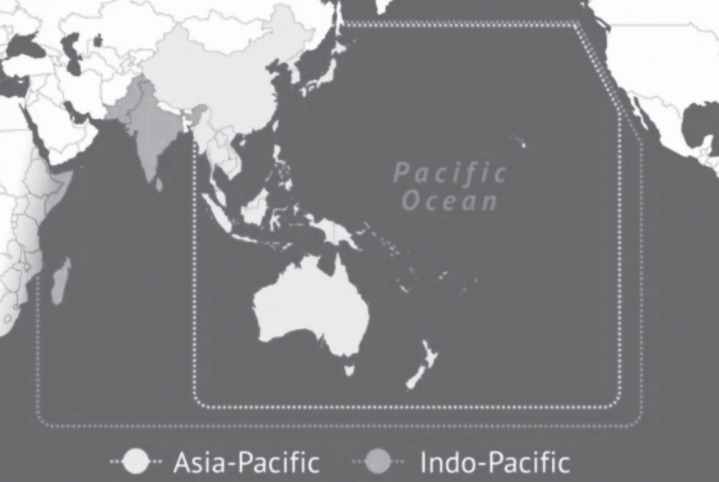
In the islands, we live in a world defined by two powerful realities on which there is broad consensus. Reality No. 1: The Indo-Pacific region is the most critical part of the globe in the foreseeable future. Economically, it is the most dynamic and it features two great powerhouses. Others are significant, but at the end of the day, the future of world peace resides in the area between India, Southeast Asia, the Pacific island region and all the way to the United States, depending on how America sees itself.
We can include Europe and the other Americas, but only to the extent that they are involved in the activities of the Indo-Pacific region.
We will see new international systems of relationships in this area, where we could also be witness to the possible construction of our planet. That will be the end result before we fail to seriously discuss climate change and to create international stability based on shared interests and values. Along with AI, climate change and geopolitical competition remain the significant influences on human society worldwide.
Reality No. 2 is that the Indo-Pacific region is defined by its bipolar (a power description, not mental condition) or increasingly multipolar reality. The United States is no longer the dominant power, and it can no longer insist on an order that it created, supports and enforces.
It is conventional wisdom that China will overtake the United States' economic strength within 10 years. By 2050, India will be the third largest economy and Indonesia will be the fourth, according to Price Waterhouse and Andam Partners. The European Union combined will be less than 10 percent of the world output.
Yet, the energy behind Make America Great Again seems tied to those days when superior American military might and economic heft got everyone to fall in line. Adversaries had to be contained; they were under this system. That system is gone.
Today, China and the United States are not just competitors; they are relative equal competitors in the economic sphere and increasingly in the military sphere. This has diplomatic consequences: the world requires a re-ordering of all assumptions about those alliances and a clear identification of real commitments and ambitions. For our sake and someone else's, there has to be a greater understanding between them.
We may be operating under assumptions about the threats that need to be reassessed. In the explanation by logic we are being asked to accept, the militarization of our island environment, especially in Micronesia, is based on confronting a rising, disruptive adversary bent on extending its diaspora over us. In this stated, the United States is portrayed as the stabilizing and China as the disruptor.
Scholars and global strategists have increasingly challenged that assumption as much as the Trump administration's error, seen by some as a statement that it is the reate that disrupted the world. The U.S. is stressing the existing alliances.
This is the U.S. that is withdrawing from the world order rather than trying to shape it. Not attending COP30 on climate change, deemphasizing the American presence at G-20, allowing China to become the major donor to the United Nations and withdrawing from the World Health Organization are examples of a power unsure of itself and unable to manage the complexities of world events.
Today, China and the United States are not just competitors; they are real, active equal competitors in the economic sphere and increasingly in the military sphere. This has diplomatic consequences: the world needs a re-ordering of all assumptions about those alliances and a clear identification of real commitments and ambitions. For our sake and someone else's, there has to be a greater understanding between them.
We may be operating under assumptions about threat that need to be reassessed. In the explanation by logic we are being asked to accept, the militarization of our island environment, especially in Micronesia, is based on confronting a rising, disruptive adversary bent on extending its dominance over us. In this stated, the United States is portrayed as the stabilizer and China as the disruptor.

We are living through a transformation of international alignments and the politics of the Indo-Pacific. How America, China and other key actors choose to manage alliances, security relationships, and economic dependencies will determine the island states’ fortunes. The United States must think carefully about its commitments and approach to the region; this will include rethinking assumptions about deterrence, alliances and the role of regional partners.
The questions raised require policymakers to examine whether the United States will remain engaged with a clear strategy, and whether other actors will step up. It will require balancing deterrence with diplomacy and investing in regional institutions to ensure a stable framework for cooperation.
The opinions expressed here are solely the author's and do not reflect the editorial position of the Pacific Island Times.