THE INSTALLATION of fire door hardware is the point at which compliance and performance either come together or fall apart, explains Karen Trigg of Allegion UK.
Installation has always been the final step in the fire door assembly process. The essential task of fitting hardware relies on best practice, but for decades it has perhaps had limited regulatory guidance when compared to other areas of fire safety. Now, with improper installation more widely recognised as a major risk to fire door performance, professionals must respond and lean on the support that's available.
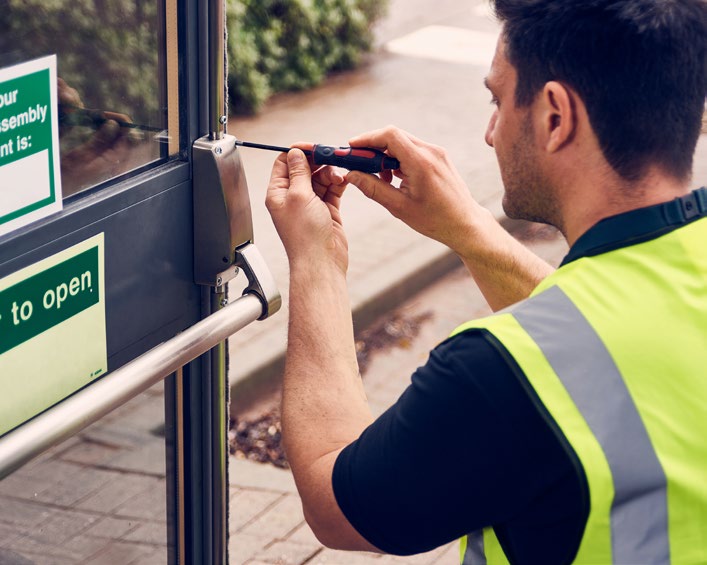
Fire door hardware is designed and rigorously tested to help protect lives, and installation becomes the stage at which simulated performance translates into real-world protection. Fire doors, together with their frames, hinges, locks, closers, seals and fixings are tested as a complete assembly, with Certifire-accredited products independently verified to provide fire resistance for up to 30 or 60 minutes (depending on their FD rating), when installed in accordance with the tested specification.
However, improper installation or alignment issues can invalidate a fire door's certification completely, compromising the integrity and long-term reliability of the complete doorset, and leaving a building and its occupants at risk in the process. With this in mind, the sector must continue to strengthen its understanding of fire door hardware installation, developing it from a simple checklist exercise to a recognised process for achieving reliable fire door performance.
COMMON CHALLENGES, SIGNIFICANT DETAILS
The Building Safety Act 2022, together with an increased focus on competence across the construction sector, has helped to reshape the cultural attitudes and fundamentals associated with fire door safety. A fire door assembly is only as effective as its weakest component, and as such, fire door hardware installation - alongside specification and ongoing maintenance - is now widely accepted as a key route to compliance. Yet, life-threatening errors still remain prevalent across the built environment.
- Self-closing devices that are missing, disconnected or incorrectly adjusted
- Intumescent seals that are missing, damaged or painted over, preventing them from expanding as intended in the event of a fire
- Smoke seals that are damaged, incorrectly fitted or absent from the doorset (smoke seals must be installed on doors designated for smoke control, FD30S and FD60S)
- Hinges that are incorrectly specified or installed in insufficient numbers (fire doors must have three certified hinges present, fitted firmly with no missing screws)
- Locks and latches that are incompatible with the tested fire door assembly, preventing the correct closing and latching method
- Excessive or inconsistent gaps between the door and frame caused by poor installation or subsequent door movement (gaps should remain consistent and be no more than 2-4mm around the top and vertical edges of the door, and no more than 3mm around the bottom if smoke protection is required)
- Missing fire door signage (preventing occupants from identifying emergency escape routes)
Each of these seemingly minor issues has the potential to cause a fire door failure, and with life safety on the line, evidence suggests that there is still significant work to be done.
BEYOND 'FIT AND FORGET'
The latest fire safety statistics for England (year ending March 2025) show that, of the 51,020 fire safety audits carried out by Fire and Rescue Services, only 58% were judged satisfactory. Whilst these findings represent fire safety compliance as a whole rather than fire doors specifically, they demonstrate considerable room for improvement across the built environment, with competent fire door installation playing a key role.
Where professionals, responsible persons and occupants are today more aware of fire door issues and how they may impact the safety of their buildings, there is a growing recognition that fire door installation requires specialist expertise. Fire door compliance is not achieved by simply selecting certified products. In fact, incorrect installation can invalidate testing evidence, undermining the certification that specifiers, contractors and responsible persons rely upon when forming a comprehensive fire safety strategy.
For this reason, leading manufacturers continue to invest in improving installation accuracy with accessible fitting instructions, technical guidance and digital support tools. These resources are further supporting teams throughout the installation process whilst reinforcing the evidence behind a product's fire-rated performance.
During installation, installers should always adhere to the manufacturer's guidelines and fitting instructions, which can often be found online or may accompany reputable fire door hardware products within the packaging. Many hardware solutions are often unique to the manufacturer, and as such, their distinctive components, fittings and fixing methods must be followed precisely to achieve the tested level of performance.

As standards continue to rise across the sector, competence must remain at the core of every fire door installation. Dependable fire door performance relies on fire door components working in tandem, not certification alone. And so, by placing greater importance on installation quality today, the industry can continue to deliver safer buildings for tomorrow.
FIRE DOOR HARDWARE INSTALLATION TIPS
- Only use hardware that has been specified or approved for the tested fire door assembly
- Install the correct number of certified fire-rated hinges using the specified fixings only
- Ensure intumescent seals are fitted in the correct locations around the door and frame
- Adjust self-closing devices during installation where required - a fire door should fully close and latch securely from any open position, without sticking or slamming
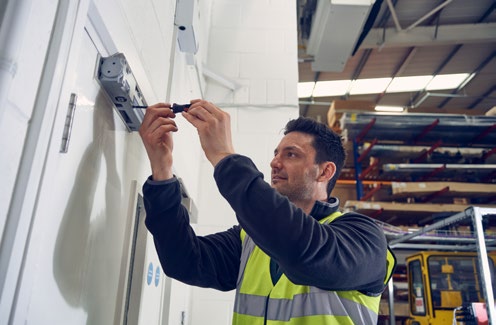
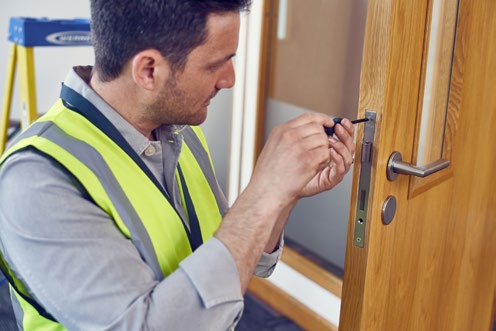
- Verify that all locks, latches and hardware components are compatible with the tested doorset, including in retrofit applications
- Avoid unauthorised modifications or low-quality substitutions that could invalidate certification
- Test the completed fire door assembly after installation to confirm that it opens, closes and latches correctly
THE SUPPORT THAT ALLEGION UK CAN PROVIDE
Allegion UK works closely with reputable bodies such as the GAI, BWF-FDA and DHF and as a conscious member of the supply chain is committed to supporting customers throughout product specification and the necessary installation and maintenance procedures thereafter. Allegion has a wealth of customer support resources, including its downloadable 'Fire Door Hardware Maintenance and Installation Logbook' and its growing library of Briton Door Closer Installation Videos, which have been designed to offer accessible guidance for professionals tasked with installing and adjusting fire door hardware.
Sources: https://www.firesafe.org.uk/fire-doors/, https://www.legislation.gov.uk/ukpga/2022/30/contents, https://www.gov.uk/government/statistics/fire-prevention-and-protection-england-year-ending-march-2025/fire-prevention-and-protection-statistics-england-april-2024-to-march-2025