Feature/Preceptorship
Hampshire County Council’s preceptorship programme has a vital role in helping newly qualified staff feel supported, connected and develop a strong sense of professional belonging. Here, members of the group reflect on it’s successes.

Preceptorship is currently a hot topic, especially with the upcoming launch of the National Preceptorship Quality Mark. While well-established in NHS settings, preceptorship remains relatively new in social care.
Social workers benefit from the structured Assessed and Supported Year in Employment (ASYE), but for allied health professionals and nurses in social care, formal early career support has historically been lacking. Hampshire County Council’s preceptorship programme is helping to bridge that gap.
Expanding support beyond OTs
The council has a well-established preceptorship programme for newly qualified occupational therapists and last year we expanded the programme to include other professionals who might otherwise miss out on preceptorship opportunities.
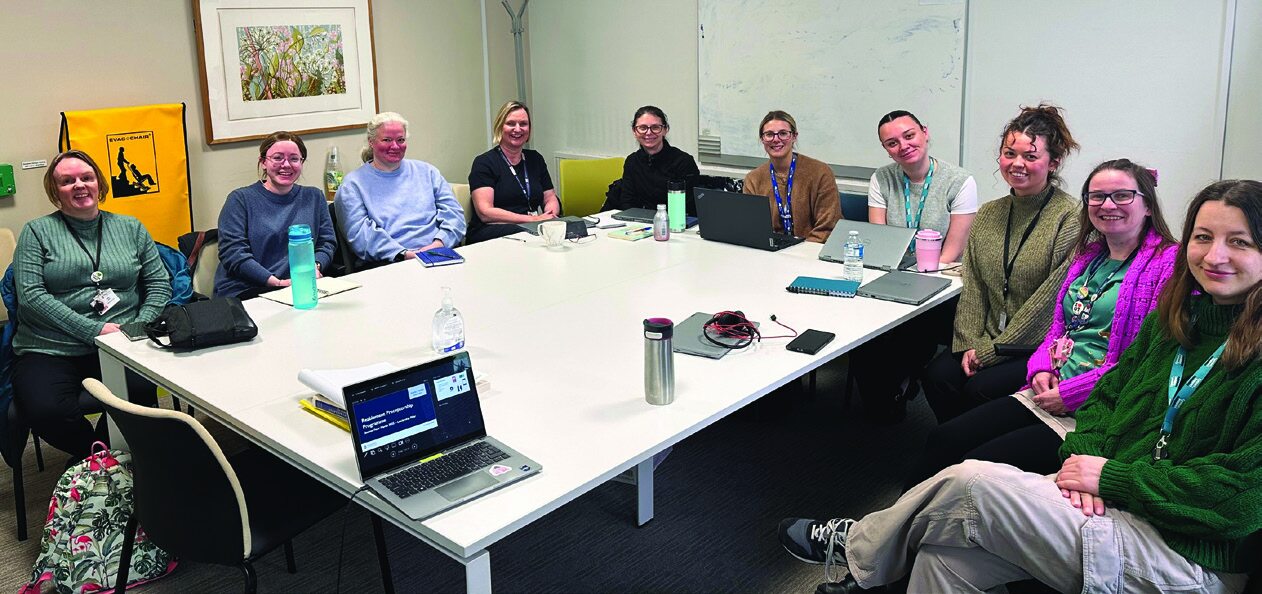
In 2025, we welcomed nine participants: six occupational therapists from the Reablement Service; one occupational therapist from Short-Stay Services (nursing home-based); one occupational therapist from Isle of Wight Council; and one vision rehabilitation specialist (VRS) from the Reablement Service.
Over six months, we met monthly for three-hour sessions, exploring topics aligned with RCOT’s Career Development Framework’s four pillars of practice (RCOT 2022). Each session was facilitated by a consultant occupational therapist and supported by an advanced practitioner (occupational therapist or vision rehabilitation specialist).
For those unfamiliar with the vision rehabilitation specialist role, we’re fortunate to have several in our Reablement Service. They empower visually impaired adults to live independently by providing tailored training in mobility, daily living skills, communication, technology and social engagement.
Although not allied health professionals themselves, they work closely with occupational therapists, sharing a similar enabling ethos.
Building belonging across boundaries
Local councils often recruit small numbers of newly qualified occupational therapists, making it difficult to run a programme for just one person. By including staff from neighbouring organisations, we ensure everyone benefits from peer support and shared learning.
‘I joined Hampshire County Council in 2004, as a newly qualified OT. At the time, I was only the second to be recruited and preceptorship wasn’t yet an established concept,’ says Joy McLaggan, facilitating OT consultant.
‘It’s inspiring to see how far we’ve come. Hampshire County Council’s commitment to investing in newly qualified staff and ensuring they benefit from structured support programmes, such as preceptorship, is truly commendable.’
Traditionally, newly qualified OTs are encouraged to begin their careers in hospital rotations. But structured preceptorship in social care is helping to challenge that norm by offering early support, supervision, and development.
Occupational therapist Lucyna Domoradzka adds: ‘As a newly qualified OT, preceptorship really helped me feel supported. It gave me the chance to meet others who were also just starting out, which made a big difference.
‘We shared our experiences and helped each other. Using the Pillars of Practice guided our learning and reflection. Looking back, I can see how much I’ve grown in confidence and skills.’
A stronger start for all
Preceptorship helps newly qualified professionals build confidence and competence while delivering person-centred care in the community. Including other professionals enriched the experience for everyone.
Vision rehabilitation specialist Claire Arnott explains: ‘Linking preceptorships between newly qualified vision rehabilitation specialists and occupational therapists was great for me, as the only newly qualified VRS in our team.
‘Being part of a strong support network with shared knowledge is invaluable, not just for me, but for the people I support.’
Suzy Peters, also an OT, adds: ‘Having a VRS in the group gave us valuable insight into another profession and how they support individuals with sensory difficulties, including the equipment they use. It’s a great reminder that working collaboratively helps us better support people to achieve their goals and independence.’
A newly qualified OT from the Isle of Wight Council also benefited from joining Hampshire’s programme, an opportunity that wouldn’t have been possible locally due to small cohort sizes.
‘The preceptorship programme gave me a sense of belonging, where a culture of continuous learning was not only encouraged but expected,’reflects Aniela Niemiec. ‘It bridged the gap between university and the realities of first-year practice, giving me the confidence, clarity and community I needed to grow into the therapist I aspire to be.’
Looking ahead
The programme fostered a strong sense of belonging and security. Feelings of imposter syndrome were acknowledged and explored, not ignored. Through regular group discussions and shared reflection, participants built confidence and professional identity.
Occupational therapist Laura Monus says: ‘I’ve been able to seek advice and resolve issues more quickly, without relying solely on formal communication channels. This has led to faster access to information and more timely discharge support for service users and their families.
‘I’ve contacted colleagues from my preceptorship group to follow up on referrals and vice versa. This direct exchange gives us a more comprehensive view of social care services and enhances continuity of care.’
What’s next?
Following the success of this programme, we’re planning to expand to 12 months, offering more protected time for learning. We’ll also include newly qualified nurses and speech and language therapists, invite staff from neighbouring smaller authorities, and apply for the National Preceptorship Quality Mark when applications open.
References
Royal College of Occupational Therapists (2021) Career Development Framework: Guiding Principles for Occupational Therapy. 2nd ed. London: RCOT. Available at www.rcot.co.uk/explore-resources/rcot-publications/career-development [accessed 18 April 2026].
Words written by the members of Hampshire County Council’s preceptorship group (pictured above). For more information contact joy.mclaggan@hants.gov.uk