Feature/Housing
With a rising demand for home adaptations in the UK, Haela Pattemore focuses on the overstretched Disabled Facilities Grant system through an occupational therapy lens and reflects on how we can address some of the gaps.
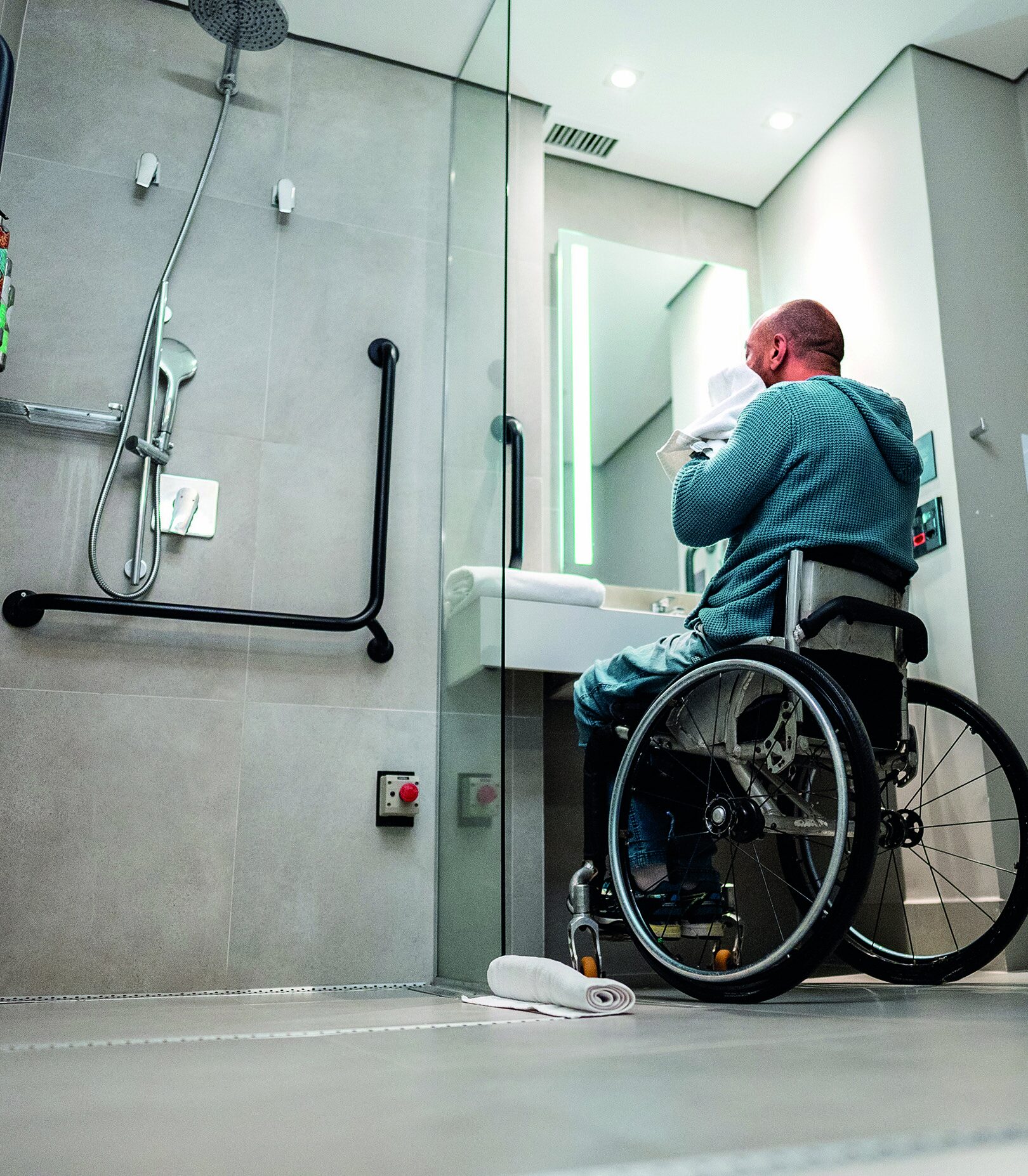
In the UK there is a rising high demand for home adaptations. Due to an aging population and increasing prevalence of chronic conditions, people are needing to adapt their environment to live well at home.
In many cases, the Disabled Facilities Grant (DFG) serves a crucial role in providing the funding for adaptations such as ramps, stair lifts and wet rooms. Unfortunately, the system is overstretched, leaving people waiting months, and in many cases years, while their independence and wellbeing deteriorates.
The scale of the problem
The average waiting time for a DFG from assessment through to installation varies significantly, depending on each local authority. Some councils with better resources and staffing can process and complete applications within months, while others have delays resulting in average wait times of one year or more (NHS Confederation 2024), making it a true postcode lottery for applicants with equally urgent needs.
In addition, independent sources report that the official standard target time frame of 18 months, comprising six months to approve the application and 12 months to complete the works, is often exceeded substantially (Gayle et al 2022).
Additionally, a council study in London saw average assessment delays of 129 days in 2023, improving only to less than half by 2024 (Russell 2024).
And Manchester City Council published a DFG governance report in 2024, saying the sharp rise in demand for major adaptations in Manchester in recent years meant that the 2024–25 DFG budget was already fully committed. As a result, the council is having to delay new assessments.
The report also found that work is not likely to be completed within the 12-month period, highlighting that individual needs will often have changed by then.
Impact on clients and families
Delays in receiving adaptations can have profound consequences on people’s safety and wellbeing. Without access to suitable bathing facilities, accessible kitchens and the ability to access other parts of their home and community with step free access, individuals are faced with increased risk of falls, pressure damage and hospital admissions.
This often places additional pressure on families, causing them to compromise their own safety with risky manual handling or resorting to makeshift temporary solutions. The burden of living in a compromised way weighs heavy on the person with the disability, diminishing their dignity, autonomy and choice.
The means test barrier
One significant challenge within the DFG system is the means test, which assesses household income and savings to determine eligibility for funding. While intended to ensure public funds target those most in need, it often inadvertently penalises adults of working age who may earn above the threshold, yet still struggle with high housing costs, mortgages, or family responsibilities.
Crucially, a partner’s income is included in the assessment, meaning a single earner in a dualincome household may be deemed ineligible despite limited disposable resources.
This leaves individuals facing urgent adaptation needs without public support, forcing them to either wait indefinitely or fund adaptations privately, an option that can be daunting without professional guidance.
The occupational therapy perspective
Occupational therapists sit at the core of assessing the need for adapted living, but are often constrained by red tape procedures and funding limitations. We strive to facilitate safe and dignified ways of living but are often hindered by service blockages and systemic inefficiencies.
Having worked as an occupational therapist in the NHS for nine years, in a range of client areas, I felt frustrated and powerless seeing individuals’ conditions worsen while their application for adaptations sat with hundreds of others, on a waiting list with no clear timeframe.
Addressing gaps in support
Navigating adaptation design, contractors and compliance requirements independently can be complex and stressful. New approaches, exemplified by services such as Homes Reimagined, offer an integrated model: professional assessment, bespoke adaptation recommendations, and full project management, from planning and co-ordinating suppliers to overseeing installation.
This all-in-one pathway provides a clinically informed and timely solution for individuals who need adaptations but fall outside public funding criteria. By consolidating these steps, the approach ensures that adaptations meet safety and functional standards while reducing the administrative burden on clients and families.
Looking ahead, some things need to change to better meet the rising demand. I believe that systemic reform is essential. Investing in local authority resources, streamlining DFG application processes and fostering integration between health, housing and social care systems is vital.
We also need to address those individuals who don’t qualify for funding, yet have pressing needs, and legitimise independent pathways and supports.
Occupational therapists can lead the way by advocating for blended approaches that merge statutory and independent services, so that timely adaptation support can be delivered more equitably.
In conclusion, the increase of adaptation needs highlights both the strengths of the current system and its weaknesses, due to stretched resources.
While DFGs provide critical support, delays and eligibility constraints leave many left compromised with a poor quality of life. For occupational therapists, this raises ethical and clinical dilemmas.
Innovative and integrated occupational therapyled services are emerging as powerful supplements to statutory provision. By embracing both public and independent models, we can help unlock more equitable and responsive access to home adaptations, ensuring that independence is within reach for all.
References
Manchester City Council (2024) DFG Governance Report 2024. Manchester: Manchester City Council. Available at https://bit.ly/41adH4q [accessed 17 March 2026].
NHS Confederation (2024) Social care and housing: Disabled Facilities Grant delays. London: NHS Confederation. Available at https://bit.ly/4uHoccS [accessed 19 March 2026].
Russell H (2024) Revealed: The shocking waiting times disabled people face for home adaptations in south London, Southwark News. Available at https://bit.ly/4uIqoBe [accessed 26 August 2025].
Gayle V, Hamada R and Boutaude C (2022) Disabled people trapped waiting years for vital home adaptations. Available at https://bit.ly/4rBgjDb [accessed 17 March 2026].
Words HAELA PATTEMORE, Occupational Therapist and Co-Director at Homes Reimagined Ltd. For more information visit www.homesreimagined.co.uk