THE JOHNSON BROTHERS AND THEIR SEVENOAKS SCHOOL LEGACY
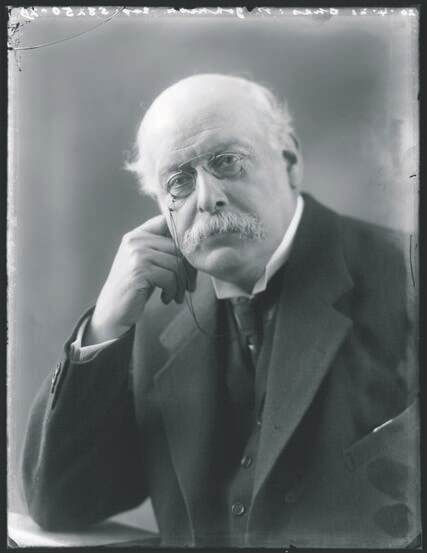
IN THE SUMMER OF 1911 Charles Plumptre Johnson and his brother, Edward Middleton Johnson, retired from their legal practices in London and moved to Park Grange in Sevenoaks.
They spent the next 37 years closely involved in the life of their near neighbour, Sevenoaks School, offering personal, practical and financial support to enhance its wellbeing and further its reputation. Today, still, the brothers’ names remain commemorated in many and varied ways throughout the school and its campus.
Charles and Edward Johnson were born in 1853 and 1860 respectively to George Johnson and his wife, Charlotte. The former had risen from humble origins in Goudhurst to become an eminent doctor specialising in cholera and kidney diseases; appointed Physician-Extraordinary to Queen Victoria in 1889, he was given a knighthood in 1892. He never forgot the transformative power of education in his own life and chose to send his two sons not to a top public school, but to Queen Elizabeth’s Grammar School in Cranbrook. It was an ethos which clearly resonated with the brothers too and fundamentally influenced their interest in Sevenoaks School (another Queen Elizabeth’s Grammar School) and their support for headmaster James Higgs-Walker’s attempts to raise its standards and reputation.
Before their retirement both brothers, neither of whom married, practised as solicitors in Lincoln’s Inn. Outside of work, Charles, in particular, took on a number of voluntary public service posts and served on the managing committees of various London hospitals. Together with Edward, he spent much of his leisure time sailing and competitively racing the Moonbeam series of yachts which he had commissioned.
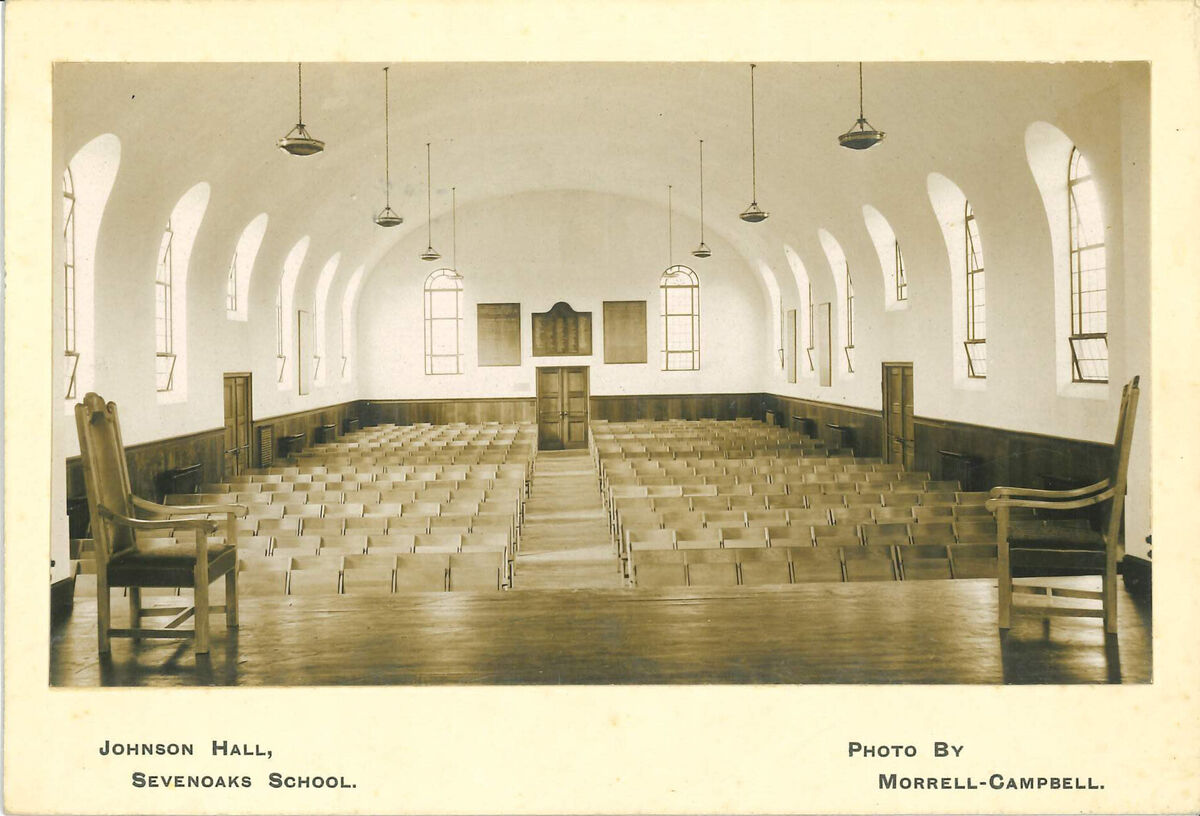
Within two years of their arrival in Sevenoaks, the brothers had joined the governing body of the school, Charles becoming Chairman in 1928. Their first recorded gift to the school was when, in 1924, they granted the use of the Park Grange fields for sport and as a playground during the construction of the Swanzy building. In 1925 came the first tangible item – a flagpole for the driveway outside School House (now Old School); described by another Governor as ‘the wand of a fairy godfather’ (Sennockian 1934) for it marked the beginning of a series of regular giving that had such an impact on the school. It was followed by Johnsons Boarding House (1927); a servants’ hall in School House, a fives court and an extension to the Assembly Hall (1930); a Sanitorium (1931); and in 1934, the Johnson Hall, now the Johnson Library.
At its opening on Speech Day, the Headmaster observed that long after the boys left the school, their thoughts would ‘return to the Hall and be mingled with gratitude to the best friend any school ever had’ (Sennockian 1934). More recent acknowledgement of the Johnson legacy has been reflected in the opening of the Plumptre All Weather Pitch in 1994 and the Plumptre car park in 2025.
Charles Plumptre Johnson died at Park Grange in May 1938. Edward Middleton Johnson, ‘living alone at Park Grange through the war years…carried on the benevolent tradition [when]…he arranged for the immediate use of…[the] Meadows as playing fields; and not long before he died he gave the money for the building of a new Pavilion at Solefields’ (Sennockian 1948).
In 1948, following Edward’s death, the Johnsons’ legacy for Sevenoaks School was fully implemented. An endowment provided for a scholarship to St John’s College, Oxford, the Park Grange estate came into the school’s possession and the residuary estate was to be held in trust for the school.
Within the last year it has been proposed that, due to diminishing funds, the CP Johnson Charitable Trust be wound up and the remaining funds given to the school’s endowment fund, created for Sevenoaks 600 and the funding of more bursary places.
‘Now both Brothers are gone – but owing to their vision and generosity…it is no exaggeration to say that Charles and Edward Johnson’s gifts have endowed the second five hundred years of the school’s history with opportunities at least equal to those which Sir William Sennocke bequeathed five hundred years ago.’ (Sennockian 1948)
Sally Robbins, Archivist