~Story and photos by Boris Ladwig
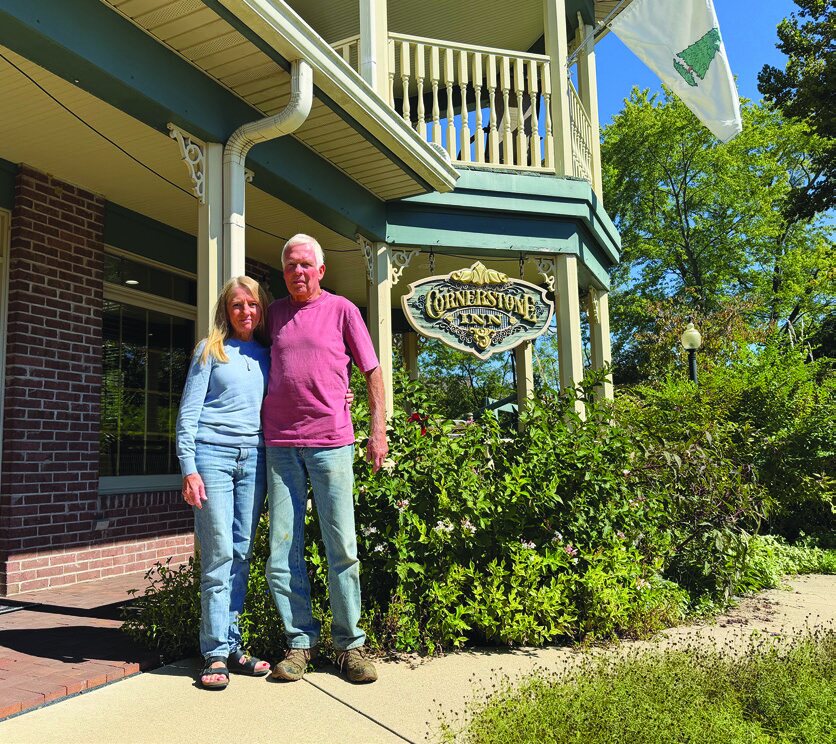
On a quiet afternoon in downtown Nashville, Pam Gould and her husband, Bruce, pointed toward a building that once leaked rainwater through the roof. A few steps away sits a former house that became guest lodging. Up the hill is a log cabin that was nearly lost to foreclosure before the couple gave it a second life.
The properties look polished now, woven seamlessly into Nashville’s tourism district. But the fireplaces, porches and guest suites hide decades of construction projects, financial gambles, and long workdays. Over more than 30 years, the Goulds have transformed a single lodging operation into a collection of inns, cottages, and vacation rentals spread across eight buildings and 37 guest accommodations.
Long before online booking platforms and luxury vacation rentals became commonplace, Pam Gould saw an opportunity in Nashville’s growing tourism market. What began in 1992 as a modest inn above retail space evolved into one of downtown’s largest locally owned lodging operations. Along the way, the Goulds weathered high interest rates, lean years, major renovations, and shifting traveler expectations. Their story parallels the story of modern tourism in Brown County, where entrepreneurship, historic preservation, and a willingness to tackle ambitious projects have helped shape the visitor experience and the community.
Fort Wayne native Pam Gould arrived in Brown County after attending Indiana University, where she studied biology. By the early 1990s, she was looking for a new chapter in life and saw potential in a downtown Nashville property that had evolved from a century-old barn into a home and business.
Turning it into a lodging operation required learning an entirely new industry.
“That was an entirely new arena for me,” Pam said.
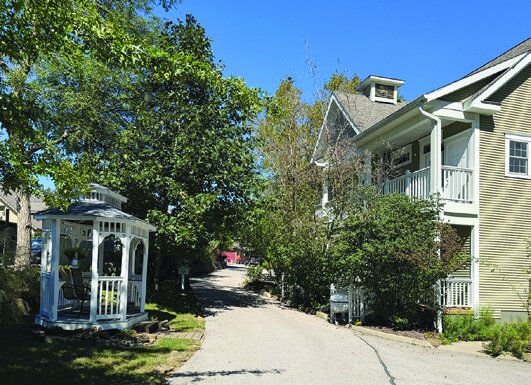
Despite having little experience in hospitality herself, she enrolled in a hotel management course at Ivy Tech. Securing financing proved even more difficult than mastering the business, as high interest rates and lenders’ skepticism tested her resolve. But Pam persisted, and on Oct. 1, 1993, she opened what would become the Cornerstone Inn at 54 E. Franklin St.
“I was jumping out of an airplane, basically, with not much of a parachute,” she said. “But it was a tremendous lot of fun.”
The venture opened with 16 guest rooms, no internet reservations and just one employee.
There were plenty of challenges. Pam’s teenage son sometimes worked overnight shifts and slept beneath the front desk. To save money, the family hauled sheets and towels to the laundromat several times a week. Unexpected property-tax bills and equipment failures strained cash flow.
“My 16-year-old son made more money than I did off the place for quite a few years,” Pam said. Gradually, however, the business found its footing. In the meantime, another transplant to Brown County was building a life of his own in Nashville. Bruce Gould, who grew up in Peru, Indiana, had served in the U. S. Army before joining the U. S. Postal Service. After working his way through a series of postmaster appointments in small Indiana communities, he arrived in Nashville in 1984 and never left.
The two met through community involvement and married in 2003. While Pam continued to oversee the growing hospitality business, Bruce spent years helping with maintenance, repairs, and improvement projects around the property while still working full time as postmaster.
Together, they began expanding beyond the inn’s original footprint, buying up adjacent properties, in part to be able to offer more parking in the tight downtown.
The couple launched one of their most ambitious projects in 2011 when Bruce Gould retired from the post office.
The evening he retired, the couple went for a walk and sauntered over to the log cabin he had long had an eye on. They looked in the window. The cabin was falling in and appeared to have been abandoned in a hurry.
Pam spotted a piece of paper sticking in the door, and saw it was regarding a sheriff’s sale for the property. It required more than $100,000 in cash, but the couple took the piece of paper as a sign. “It was a big leap of faith for us,” she said. But she also joked that the couple needed to buy something to keep him busy in retirement.
The cabin proved to be a good fit. It needed new flooring, foundation work, windows, plumbing, a kitchen and other things. “It needed everything,” Bruce said. Nine months later, the couple moved to another property they owned in town and offered the renovated log cabin to tourists.
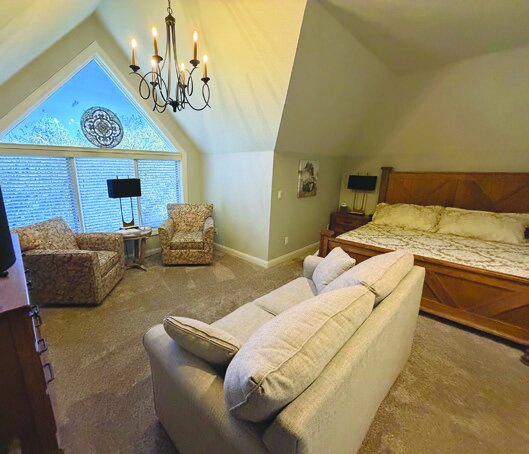
The cabin helped expand the Goulds’ portfolio beyond the original inn and reflected an effort to cater to different customers. As travelers increasingly sought larger spaces, fireplaces, hot tubs and gathering areas, the couple continued adapting. In their main building, they repeatedly combined smaller rooms into larger suites, while other properties were renovated to offer the kinds of amenities modern visitors expect.
Another fixer-upper the couple purchased in 2005 had been vacant for five years. The roof leaked, the plumbing was shot and a strong draft moved the curtains. Behind the kitchen cabinets, they found a possum skeleton. That killed the couple’s plan to immediately move into the house.
Instead, they gutted the house and started over, adding new drywall, wiring, plumbing, heating and cooling.
The couple usually have a good idea as to how much it will cost to make a space livable, but as they get into a project, costs usually climb because they keep coming up with new ideas to improve the spaces.
“This would look good—but this would look better, and so we always go with the best,” Bruce said.
“[There’s] an intangible value in knowing you did something right and didn’t cut corners,” Pam said.
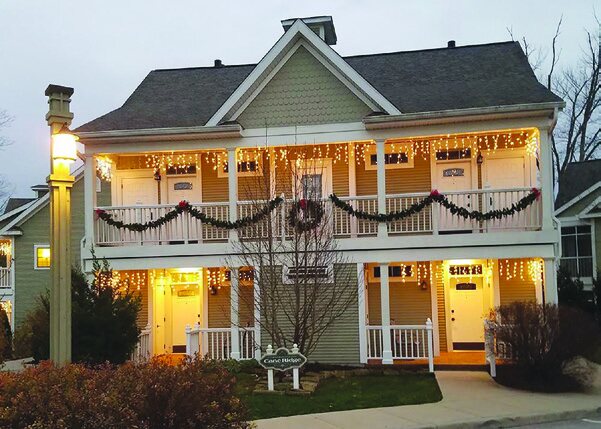
The Goulds now oversee a hospitality business far larger than the one Pam launched in 1993, but neither appears eager to slow down.
Pam still handles bookkeeping and problemsolving, while her husband, who jokingly refers to himself as the “executive gardener,” continues to spend much of his time landscaping, repairing and improving the properties.
Even now, the Goulds continue searching for their next challenge. They recently acquired additional downtown property and continue to explore future development opportunities.
“I think we’ve got a couple more buildings in us yet,” Pam Gould said.