New data shows high levels of dangerous gas detected in the Triangle
New findings from the NC Department of Health and Human Services reveal high radon levels detected in 77 out of 100 North Carolina counties, including all areas within the Triangle. Radon, a colorless, odorless gas linked to lung cancer, poses a significant health risk.
Posted 4:25 PM Dec 17, 2024
Destinee Patterson, WRAL Multimedia Journalist
New data from the NC Department of Health and Human Services shows 77 of the 100 counties in North Carolina have at least one building with high radon levels. That includes all of the Triangle.
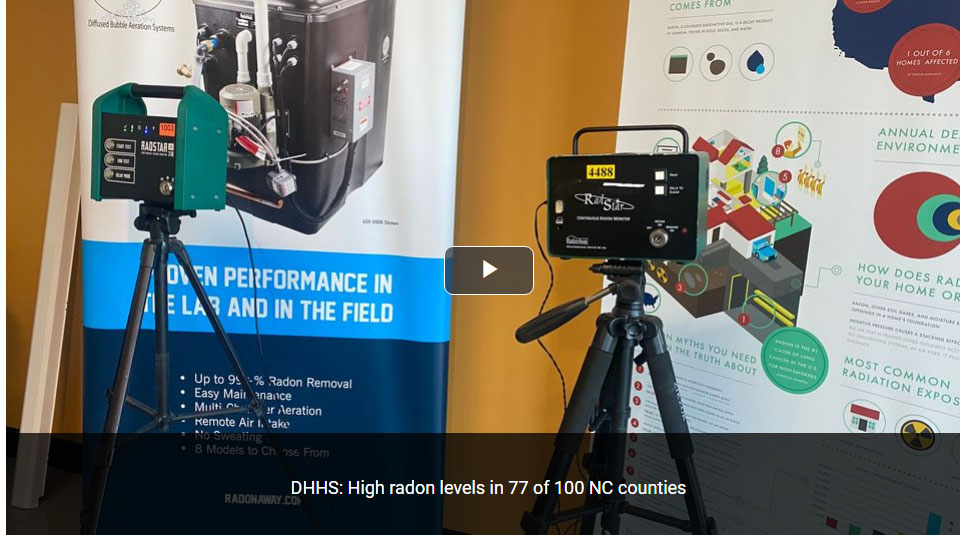
Radon is a type of gas that you can't see, smell, or taste. It forms when certain radioactive materials, like uranium, thorium, and radium, break down in soil, rocks and water. The gas can seep into a home or building through cracks in the foundation, walls or floors.
“If the house has a basement, we usually set [the radon detection device] there because that's the lowest floor in the home. If not, we set it on the first floor, because with it being the lowest floor on the home, it is closer to the ground, and it normally gives the highest radon levels,” said Isabella Aikens, a radon technician with First Choice R & R Radon Remediation.
According to the Environmental Protection Agency, radon is the number one cause of lung cancer among non‐smokers. Three groups are most at risk for radon‐induced lung cancer: children, people who regularly smoke and lung cancer survivors.
Radon levels in the air are measured in "picocuries per liter of air," abbreviated as "pCi/L." A radon level between 2 and 3.9 pCi/L is seen as a moderate risk, while 4 pCi/L or more is considered a high risk for lung cancer, according to NCDHHS.
The highest level found in Wake County was 257.8 pCi/L. The state recommends people in Wake County test air inside buildings and private well water.
Wake County, Franklin and Warren counties have a moderate risk for private well water.
Ethnic and racial minorities as well as those with lower incomes are disproportionately affected, as they are least likely to know about radon gas and its impacts and may not have the resources to mitigate elevated indoor radon levels, according to NCDHHS.
The department is also working to require public schools to test and mitigate for high levels of radon.
"There were tests that were conducted back in the early 90s of schools. In terms of actions, I know of many schools in North Carolina that are voluntarily addressing radon, whether they're installing radon mitigation systems, or building new schools with mitigation systems before they even know if a high level even exists," said Philip Gibson, NC Radon Program Coordinator.
He noted there are no laws, rules or regulations requiring schools to take any action around radon.
For people buying a home, the state department of health and human services says sellers are not required to fix the problem.
“It’s not a requirement to address it, but it’s a requirement to communicate about it,” Gibson said.
If high levels of gas are found in your home or building, a certified radon professional can install a system to lower the radon levels.
NCDHHS listed radon as one of the top priorities in improving life expectancy in 2023. The state is trying to reduce radon exposure through grant funds for homeowners. Starting January 1, you can request a free radon test kit from the State Department of Health and Human Services. The department has 2,000 available, on a first‐come, first‐served basis.
Source: https://www.wral.com/news/local/high‐levels‐dangerous‐radon‐gas‐detected‐triangledecember‐2024
###