ARTIST FEATURE – ANDY QUILTY
Whether it's a work of art or a beautifully crafted home, the most meaningful creations begin with the same foundation: mastering the craft, then making it your own.
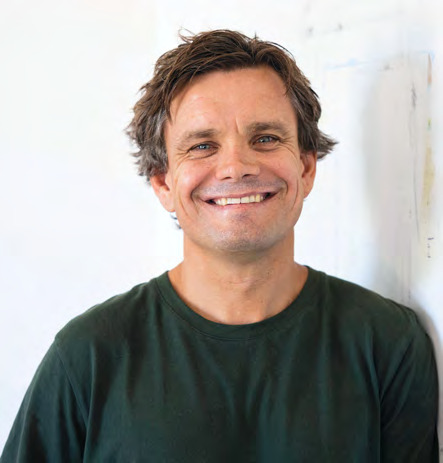
For acclaimed Perth artist Andy Quilty, that journey began in the outer suburbs of Rockingham, where childhood bus rides were spent sketching cartoons from Mad Magazine, drawing Metallica logos for older kids as his way of “fitting in”. Growing up as one of seven children, a strong work ethic came naturally.
From Fine Arts at Curtin to painting surfboards in a local factory, Andy later studied graphic design, travelling the world laptop-in-hand as a freelancer. But in his late twenties, he realised hands-on art was what he truly wanted to pursue. “Making art is a privilege,” Andy says. “I was making art all the time, so when I was offered my first show, I turned it around within two months.”
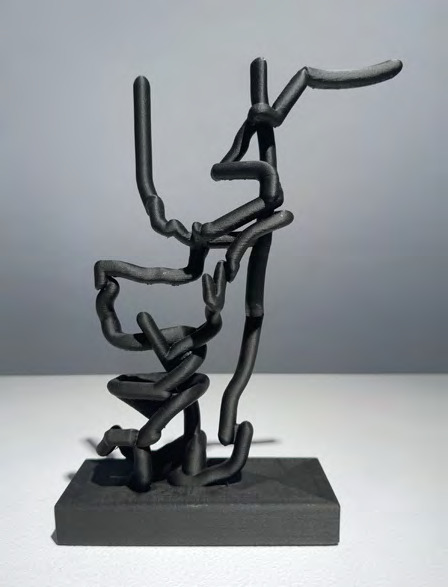
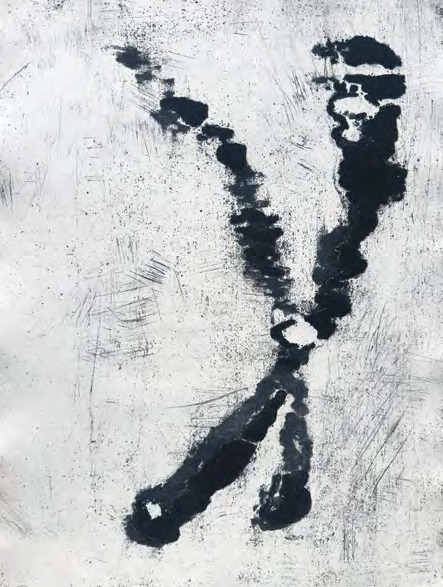
For Andy, every artwork begins with an observation. “I’ve made a whole series of works based on burnouts,” he says. “It all stems back to when I was younger... I realised what I was interested in was the drawing. Instead of drawing with a pencil, they were drawing with a car or bike. The burnouts are a way of young people saying, ‘I was here’.”
Over his career, Andy has built a practice spanning painting, drawing, printmaking, photography and video. Regardless of the medium, his work often begins the same way: with inspiration from the ordinary. A chair glimpsed from the kitchen table or the sweeping marks left by burnouts and skids. Where others see tyre marks, Andy sees drawing in public space, elevating fleeting moments of outer suburban life into works of art.
Despite his discipline, Andy rejects perfection. “I'm quite the opposite of meticulous,” he says.
“The best discoveries come from taking risks. Once you know the underlying structure, you can experiment with it and break the rules to make it your own.”
Today, alongside his own practice, Andy lectures at UWA and works with Aboriginal art centres throughout regional and remote Western Australia. His role, he says, is never to change an artist's style, but to facilitate others in their own discovery, a pursuit he finds just as fulfilling as creating his own work.
“You make something, you put it out there and once you do that, it's kind of not yours anymore. The audience will make their own interpretation – and that's a beautiful thing.”