~by Mandi Rainwater
Tucked into the rolling hills of Brown County, Bill Monroe Music Park & Campground is more than a venue, it’s a living piece of music history. Bean Blossom became famous for live entertainment in 1941, when the Indianapolis Star reported that tourists were flocking to the village for “The Brown County Jamboree,” a country music variety show.
Bill Monroe was drawn to the jamboree in 1951 and purchased the property just a year later. In 1967, Bill Monroe hosted the first annual festival there, then dubbed the “Big Blue Grass Celebration.” Though he didn’t want to put his name on it at the time, the moniker still spoke directly of the iconic artist. The term “bluegrass music” spawned from Bill Monroe’s 1939 band, the “Blue Grass Boys.”
Bill Monroe’s legacy lives on today, evident in the vibrant spring events there that herald the beginning of festival season in south central Indiana.
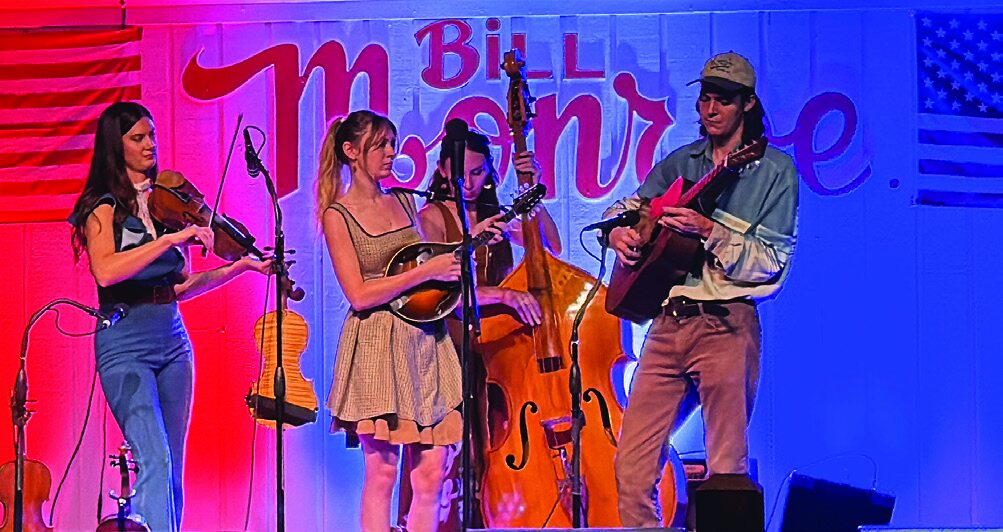
Bill Monroe’s bluegrass festival distinguished itself from its very earliest days as a laid-back and accessible event. Generations of artists have not only played on the stage, but more importantly, have gathered in campsites, under trees, and around campfires with their instruments and voices for the most memorable part of the evening.
Headlining musicians and amateurs alike gather in picking circles that carry the music into the wee hours of the morning. These improvisational jams are at the heart of the music park’s events, drawing locals to late night campfires where they can exchange ideas and songs.
That spirit is still strong today. The park remains charmingly unpolished and entirely welcoming, with annual events that feel as much like family reunions as they do concerts. Music doesn’t just happen on the stage. It lives across the entire property.
On Memorial Day Weekend, the Americana Bean Jamboree Festival sets the tone for the season with inclusive music. The lineup leans into Americana influences that broaden the traditional bluegrass foundation while still honoring it. Unlike other festivals at the music park, this one is free admission with all paid camping spots, or just $10 per day without camping.
The festival kicks off with a Friday jam on the main stage and continues through Saturday and Sunday.
The music park’s manager, Rex Voils, describes it simply: bring a picnic basket, settle in, and enjoy the atmosphere. That philosophy shapes the entire weekend. Families spread out blankets, kids roam freely, and music drifts across the grounds in a way that feels unstructured but intentional.
The Bill Monroe Bluegrass Festival is the longest continuously running bluegrass festival in the world. For this four-day event, June 17–20, festival passes do not include camping. Campsites and cabins must be reserved separately. The lineup includes over a dozen bluegrass bands, culminating with Doyle Lawson & Quicksilver on Saturday night. “The most important part of this park is the picking after the show,” says Voils. The performances themselves are only part of the draw. What keeps people coming back is the feeling that there’s no strict divide between artist and audience. Musicians aren’t tucked away backstage; they’re part of the same environment as everyone else. You might watch a set in the afternoon and then find yourself sitting a few feet away from the same musician later that night, trading songs around a fire.
The music park is also deeply committed to providing a family-friendly environment. Voils describes this as the one non-negotiable element of his events. “It’s a safe haven where you can bring your kids,” he says.
When you’re not enjoying the music, the best way to soak up the rich heritage on this soil is to stroll through Bill Monroe’s Bluegrass Hall of Fame Museum. Here, you’ll find treasures like Bill Monroe’s duct-taped mandolin case, Dolly Parton’s stage dress, and John Hartford’s hat, coat, and vest. Each time someone is inducted into the museum’s Hall of Fame, they contribute to the collection. Sam Bush, who will join the Hall of Fame this September, is bringing a mushroom shirt to add.
Voils considers himself the caretaker of a precious tradition. While the stage is being wrapped in metal to preserve its integrity, it will keep its beloved look. “I want this park to be what it is now,” Voils says of his hopes for the next decades.